Rob Peace
2024 · 2h 0m
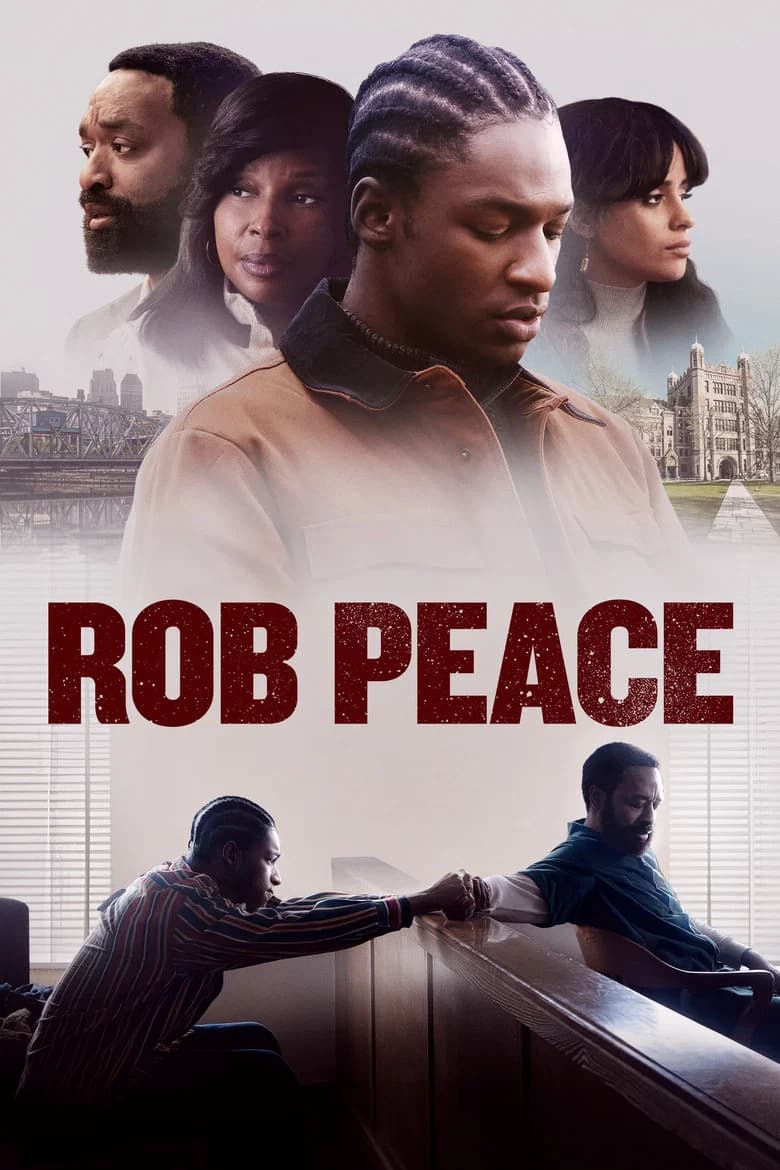
An underprivileged, gifted young black man from Newark reaches Yale University, only for shadows and injustices from his past to threaten his future.
Directed by Chiwetel Ejiofor





Reviews
No reviews yet — be the first.
2024 · 2h 0m
An underprivileged, gifted young black man from Newark reaches Yale University, only for shadows and injustices from his past to threaten his future.
Directed by Chiwetel Ejiofor
No reviews yet — be the first.

CinemaSerf
Jay Will turns in an engaging enough effort here but I found the whole story just a bit lacking in substance. It's based on a true story, adapted by director Chiwetel Ejiofor who plays the father of the eponymous young lad. He's separated from his mother (Mary J. Blige) but seems to be on decent terms with them as he comes for a routine visit in his dilapidated old car. Quickly, a tragedy strikes and dad "Skeet" finds himself sent to prison for a double murder. It falls to son Rob to try to find a way to prove his innocence. Skip on a few years and we find this young man, highly adept at mathematics, proving his genius as he manages to get into the Ivy League thanks to some sponsorship from his prep school but again, he is constantly striving to find a way to extricate his dad from jail. It's his skills at chemistry that now serve a different purpose as he and a few colleagues develop a brand new revenue stream that makes him very popular amongst the student body (and mind) whilst raising the cash to fund his dad's appeal. Meantime, with their community gradually falling to wrack and ruin, he also hits on the idea of using some of his cash to kick-start refurbishment works on over 170 homes that have been abandoned or foreclosed upon to revitalise his community - but when the sub-prime crash hits the world it leaves him desperately exposed in more ways than one. When we get to the end of this film, it does make you look back and think a little about how society can contrive to thwart people with even the slightest degree of social ambition - even when is appears to be eminently commercially viable, but the problem here is that there's just way too much missing from the narrative. We skip ahead when we ought to be developing his character his situation. There is virtually nothing from the trial that convicted his father, for example. Peace is clearly a decent man of idealism, reduced to using the tools at his disposal to funds things way more permanent than a flashy car or some bling for his girl (Camilla Cabello) but again the storytelling leaves us to make too many assumptions about who did what back when and about his own, ostensibly victimless, crimes that risk compromising his long sought goals. Interestingly, this isn't a film that takes much of a racial stance. His colour seems not to have been especially relevant as his education progressed but in the end it was maybe just a short story that's undercooked here and skirts over too many of the issues it needed to fulfil it's promise. It's still worth a watch, but the telly will suit it fine.

Marco-Hugo Landeta Vacas
(CASTELLANO) Otra vez una película basada en hechos reales. Y otra vez me ocurre algo bastante extraño: hay momentos en los que no me creo lo que estoy viendo. Con Rob Peace el problema es incluso más frustrante porque hay una parte de la película que sí me interesa bastante. Yale. Los estudios. Los amigos. Las fiestas. Ese chico brillantísimo entrando en un lugar que parecía estar a kilómetros de la vida de la que procede y demostrando que puede estar perfectamente allí. Ahí Rob me interesa. Porque deja de ser "el protagonista de una historia real trágica" y empieza a parecer una persona. Tiene inteligencia. Ambición. Amigos. Sentido del humor. Una carrera por delante. Una relación. Una vida. Jay Will funciona especialmente bien en esos momentos. Tiene suficiente carisma como para que entendamos por qué tanta gente veía algo extraordinario en Rob. Y la contradicción de Yale es interesante. Puede entrar en una de las universidades más prestigiosas del mundo. Puede destacar académicamente. Puede moverse entre estudiantes de entornos completamente diferentes al suyo. Pero sigue llevando Newark encima. Su familia. Su barrio. Su padre. El dinero. La sensación de tener un pie en dos mundos y no terminar de pertenecer completamente a ninguno. Ahí había una película que me interesaba muchísimo. El problema es que Rob Peace quiere contar toda su vida. Y cuanto más intenta hacerlo, más empieza a parecerme una sucesión de acontecimientos que una historia bien construida. Especialmente con su padre. Skeet está en prisión y Rob dedica durante años una cantidad enorme de energía, dinero y tiempo a intentar demostrar su inocencia. Entiendo perfectamente que eso ocurrió. Entiendo también que esa relación marcó profundamente su vida. Pero cinematográficamente se me hace muy pesada. Las visitas. Las conversaciones. Las exigencias. La culpa. Otra apelación. Otro problema. Otra llamada. Otra vez el padre. Y llega un momento en que, sinceramente, deja de interesarme. Eso no significa que el conflicto no sea importante. Significa que la película no consigue hacer que yo lo sienta con la intensidad que necesita. Chiwetel Ejiofor interpreta a Skeet intentando mantenerlo alejado del tópico del padre delincuente y egoísta. Hay afecto. Hay admiración. Hay dependencia. También hay una presión enorme sobre su hijo. Pero esa relación se vuelve cada vez más absorbente y, para mí, menos convincente. Especialmente cuando Rob empieza a tomar determinadas decisiones. Rob es un estudiante extraordinario. Tiene una formación científica excepcional. Tiene oportunidades. Tiene contactos. Y al mismo tiempo empieza a tomar decisiones que parecen chocar frontalmente con todo lo anterior. La película intenta explicarlo mediante muchas cosas. La lealtad al padre. El peso de su comunidad. El dinero. La desigualdad. La sensación de responsabilidad hacia quienes deja atrás. La imposibilidad de escapar completamente del lugar del que procede. Todo eso tiene sentido. Pero hay demasiado. Y no siempre está bien conectado. Mary J. Blige me funciona mejor como Jackie precisamente porque su posición es más clara. Ella quiere que su hijo avance. Que estudie. Que salga adelante. Que aproveche aquello por lo que ha trabajado tanto. Y cuando vemos a Rob en Yale, entiendes perfectamente lo que ella estaba intentando conseguir. Por eso esos momentos me gustan. Porque durante un rato parece que estamos viendo posibilidades. No destino. No tragedia. Posibilidades. Rob estudiando. Rob con amigos. Rob en fiestas. Rob enamorándose. Rob siendo simplemente un chico joven que está viviendo una vida que se ha ganado. Ahí la película respira. Cada vez que vuelve a la cárcel, vuelve también ese peso. Y poco a poco me desconecta. Jay Will consigue evitar que Rob se convierta completamente en un símbolo. Eso tiene mucho mérito. Pero el guion insiste demasiado en explicarnos qué significa su vida. Y cuanto más intenta explicarla, menos natural me parece. Quizá el verdadero Rob Peace fuera precisamente así de contradictorio. Probablemente. La película está basada en un libro escrito por alguien que lo conoció muy bien. Pero entonces el reto era todavía mayor. No simplificarlo. No convertir su vida en una moraleja. Hacer que entendiera cómo alguien capaz de llegar tan lejos podía también terminar tomando decisiones que parecen llevarlo exactamente en la dirección contraria. Yo no terminé de entenderlo. Y por eso la película tampoco terminó de convencerme. Hay una historia extraordinaria aquí. Hay un actor protagonista muy bueno. Hay momentos en Yale que me interesaron mucho. Y hay una reflexión potente sobre movilidad social, familia y la dificultad de dejar atrás el lugar del que vienes. Pero también hay una relación padre-hijo que me resulta agotadora. Una estructura demasiado biográfica. Y demasiados momentos en que el guion me dice lo que Rob representa en lugar de conseguir que simplemente vea quién era. Otra historia real que, paradójicamente, necesitaba parecer bastante más real. (ENGLISH) Another movie based on a true story. And once again, something rather strange happens to me: there are moments when I do not believe what I am watching. With Rob Peace, that becomes even more frustrating because there is a substantial part of the movie that I genuinely like. Yale. The studying. The friends. The parties. This extraordinarily intelligent young man entering a world that once seemed impossibly far from where he came from and proving that he absolutely belongs there. That Rob interests me. Because he stops being "the subject of a tragic true story" and begins to feel like a person. He is intelligent. Ambitious. Funny. He has friends. A future. A relationship. A life. Jay Will is especially good in those sections. He has enough charisma to make it easy to understand why so many people saw something exceptional in Rob. The Yale contradiction is also fascinating. He can enter one of the world's most prestigious universities. He can excel academically. He can move among students from completely different backgrounds. But Newark is still with him. His family. His neighborhood. His father. Money. The feeling of having one foot in two different worlds while never fully belonging to either. There was a movie there that interested me enormously. The problem is that Rob Peace wants to tell his entire life. And the more it tries to do that, the more it begins to feel like a collection of events rather than a fully shaped story. Especially when it comes to his father. Skeet is in prison, and Rob spends years investing enormous amounts of energy, money and time trying to prove his innocence. I understand that this happened. I understand that the relationship deeply shaped Rob's life. But dramatically, I found it exhausting. The visits. The conversations. The demands. The guilt. Another appeal. Another problem. Another call. Back to his father again. Eventually, I simply stopped caring about that part of the movie. That does not mean the conflict is unimportant. It means the film never made me feel its importance with the intensity it required. Chiwetel Ejiofor plays Skeet with an obvious desire to avoid the stereotype of the selfish criminal father. There is affection. Admiration. Dependence. There is also enormous pressure placed on his son. But the relationship becomes increasingly consuming and, for me, increasingly difficult to believe emotionally. Especially once Rob begins making certain decisions. Rob is an extraordinary student. Scientifically gifted. He has opportunities. Connections. A potential future. And at the same time he begins making choices that seem to collide directly with all of that. The film tries to explain Rob through many different forces. Loyalty to his father. Responsibility toward his community. Money. Inequality. The feeling that moving forward means leaving people behind. The impossibility of completely escaping where you came from. All of those ideas make sense. There are simply too many of them. And they do not always connect. Mary J. Blige works better for me as Jackie precisely because her position is clearer. She wants her son to move forward. To study. To succeed. To take advantage of everything she worked so hard to make possible. And when we see Rob at Yale, you understand exactly what she was fighting for. That is why I like those sections. For a while, the film becomes about possibility. Not fate. Not tragedy. Possibility. Rob studying. Rob with friends. Rob at parties. Rob falling in love. Rob simply being a young man living a life he earned. The movie breathes there. Every return to the prison brings the weight back. And gradually, it loses me. Jay Will does a great deal to stop Rob from becoming merely a symbol. That is an achievement. But the screenplay keeps explaining what Rob's life means. And the more it explains, the less natural the person begins to feel. Perhaps the real Rob Peace was exactly this contradictory. Probably. The movie is based on a book written by someone who knew him well. But that only makes the challenge greater. Do not simplify him. Do not turn his life into a lesson. Make me understand how someone capable of going so far could also make choices that seem to take him in exactly the opposite direction. I never fully understood that. And because of that, I never fully believed the movie either. There is an extraordinary story here. There is a very good lead performance. There are Yale scenes I found genuinely engaging. And there is a powerful idea about social mobility, family and the difficulty of leaving behind where you came from. But there is also a father-son relationship I found increasingly tedious. A structure that feels too much like a conventional biopic. And too many moments when the screenplay tells me what Rob represents instead of simply allowing me to understand who he was. Another true story that, paradoxically, needed to feel much more real.
Where to watch
Stream with your subscription


Rent or buy